102 liens privés
Covoiturage libre, sans commission et coopératif
Mobicoop c’est bien plus que du covoiturage
Covoiturage sans commission
Héritière des valeurs du covoiturage libre, Mobicoop est un service de covoiturage gratuit, c'est-à-dire que le site ne prélève aucune commission sur les trajets, et c’est aussi sans publicité ! Les trajets sont donc moins chers pour les covoitureurs qui en partagent les frais.
Un logiciel libre
La liberté numérique est au cœur des valeurs de Mobicoop. En faisant le choix de produire un site entièrement en logiciel libre nous garantissons ainsi la souveraineté numérique de tous les usagers du covoiturage et la protection des données. Chacun peut contribuer au code source et faire de la mobilité partagée un bien commun.
La coopérative du covoiturage
Mobicoop est une coopérative, la plateforme appartient donc à ses sociétaires dans la logique 1 sociétaire = 1 voix. Ce statut permet une gouvernance ouverte entre sociétaires, salariés, utilisateurs de la plateforme et clients. Toutefois il n’est pas obligatoire d’être sociétaire pour utiliser le service de covoiturage.

WebSockets revolutionized the web, turning clunky, slow real-time interactions into sleek, low-latency experiences. Your comprehensive guide to mastering WebSocket technology.
When we started developing our recently-released mini-strategy game 2 Planets, we wanted to add networked multiplayer support. Since the game is a side project and would be released for free, we didn’t want to spend much time and money on maintaining dedicated servers. Instead, we chose a simple peer-to-peer networking setup where both players would connect to the other player’s machine directly.
Setting up your own
You’ll need the following:
- The excellent HolePuncher Godot plugin and server by Cregg Hancock
- A server or service allowing you to host a small python application (e.g. Heroku or Vercel)
- Basic networking and server administration knowledge. Using a service like Heroku, you can get a python server up and running pretty easily, but you’ll still need some experience to configure everything correctly.
- An understanding of Godot’s multiplayer API for connecting clients using the IP obtained from the rendezvous server and synchronizing the game state.

MindAR is a web augmented reality library. Highlighted features include:
- ⭐ Support Image tracking and Face tracking. For Location or Fiducial-Markers Tracking, checkout AR.js
- ⭐ Written in pure javascript, end-to-end from the underlying computer vision engine to frontend
- ⭐ Utilize gpu (through webgl) and web worker for performance
- ⭐ Developer friendly. Easy to setup. With AFRAME extension, you can create an app with only 10 lines of codes

La Quadrature du Net promeut et défend les libertés fondamentales dans l’environnement numérique. L’association lutte contre la censure et la surveillance, que celles-ci viennent des États ou des entreprises privées. Elle questionne la façon dont le numérique et la société s’influencent mutuellement. Elle œuvre pour un Internet libre, décentralisé et émancipateur.
Résistance à l’Agression Publicitaire milite contre le système publicitaire depuis 1992. Notre approche est de répondre aux enjeux sociaux, économiques et environnementaux en agissant pour la liberté de réception et la sobriété publicitaire.
Un réseau social fédéré axé mobile propulsé par ActivityPub. Rejoignez le fediverse avec confidentialité, sécurité et liberté.
Connectez-vous au fediverse via un serveur relais conçu spécifiquement pour les appareils mobiles. Rejoignez un réseau décentralisé où vous contrôlez vos données, votre vie privée et votre expérience sociale.
FMD Android
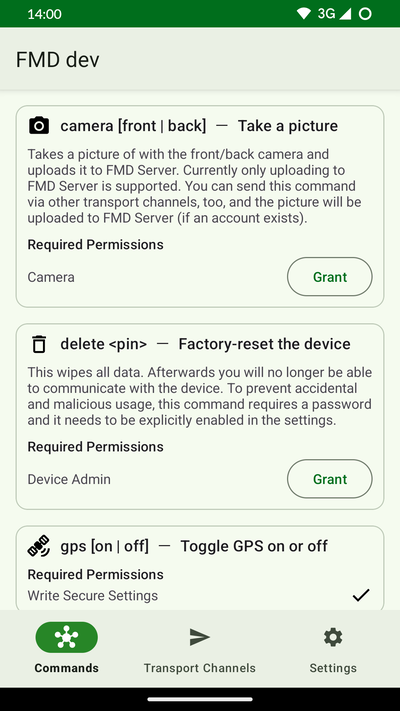
An app to locate and remotely control your Android device. This is useful if you have lost or misplaced it.
FMD Server
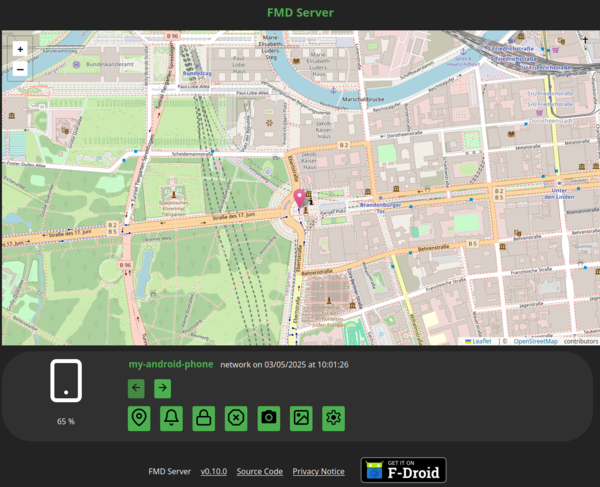
A web server to connect to FMD Android, and a web interface to control your device.
Congratulations UnifiedPush! Congratulations Murena!
Murena's /e/OS 2.5 ships with UnifiedPush support included as announced by a small note in the 2.5-t release notes .
This exciting development brings Google-free push messaging to the regular users of an important player in the freedom mobile OS space.
ntfy lets you send push notifications to your phone or desktop via scripts from any computer, using simple HTTP PUT or POST requests. I use it to notify myself when scripts fail, or long-running commands complete.
OpenEdition est une infrastructure complète d’édition numérique au service de la communication scientifique en sciences humaines et sociales. Elle rassemble quatre plateformes dédiées aux revues avec OpenEdition Journals, aux collections de livres avec OpenEdition Books, aux carnets de recherche avec Hypothèses et aux événements scientifiques avec Calenda.
Infrastructure nationale de recherche, OpenEdition est portée par OpenEdition Center, Unité d'appui et de recherche (UAR 2504) du CNRS, d’Aix-Marseille Université, de l’EHESS et d’Avignon Université.
Ses missions
- Le développement de l’édition numérique en accès ouvert
- La diffusion des usages et compétences liées à l’édition numérique
- La recherche et l’innovation autour des méthodes de valorisation et de recherche d’information induites par le numérique
- Garantir un haut niveau de fiabilité et de disponibilité des plateformes
OpenEdition inscrit son action dans le cadre du Plan national pour la science ouverte.
Soutien financier à l'accès ouvert
OpenEdition Freemium pour les revues et collections de livres propose un ensemble de services et de formats mis à disposition des institutions (bibliothèques, campus, centres de recherche) et de leurs usagers.
Ce partenariat entre OpenEdition et les institutions vise à construire un modèle économique innovant et durable, la totalité des revenus engendrés étant réinvestie dans le développement de l’édition numérique scientifique en accès ouvert.
Informations publiques et gratuites sur les entreprises
L’objectif de ce TD est d’explorer le protocole HTTP et avoir un aperçu des principales caractéristiques des protocoles des couches inférieures.
- HTTP: requêtes et réponses simples
- HTTP: requêtes conditionnelles
- Récupération de documents longs
- Documents HTML avec objets intégrés
- Authentification HTTP
Password management should be simple and follow Unix philosophy. With pass, each password lives inside of a gpg encrypted file whose filename is the title of the website or resource that requires the password. These encrypted files may be organized into meaningful folder hierarchies, copied from computer to computer, and, in general, manipulated using standard command line file management utilities.
pass makes managing these individual password files extremely easy. All passwords live in ~/.password-store, and pass provides some nice commands for adding, editing, generating, and retrieving passwords. It is a very short and simple shell script. It's capable of temporarily putting passwords on your clipboard and tracking password changes using git.
You can edit the password store using ordinary unix shell commands alongside the pass command. There are no funky file formats or new paradigms to learn. There is bash completion so that you can simply hit tab to fill in names and commands, as well as completion for zsh and fish available in the completion folder. The very active community has produced many impressive clients and GUIs for other platforms as well as extensions for pass itself.
Overview
This add-on adds VRM-related functions to Blender, such as importing and exporting VRM, adding VRM Humanoid and setting MToon shaders. Bug reports, feature requests, pull requests, etc. are welcome. I have taken over the development after Version 0.79 from the author, @iCyP.

Open Minds vise à augmenter les compétences numériques d’un des secteurs clés de la société civile européenne : celui couvrant les acteurs sociaux et culturels, et le large public avec lesquels ils sont en contact. Les besoins en matière de transition numérique se sont accrus durant la crise sanitaire qui a mis en évidence l’ampleur de la fracture numérique et des besoins de montée en compétences numériques.

image OpenMinds_imageresource011024x642.svg (0.1MB)
Pour développer le projet, nous avons proposé de travailler selon trois axes : un accès libre à une base de données de ressources en logiciels libres, un environnement de formation pour les acteurs socioculturels, et des publications régulières pour encourager le changement vers les logiciels libres.
Pour des communs en santé !
InterHop.org promeut et développe l'utilisation du logiciel libre et open-source pour la recherche en santé.
InterHop.org regroupe des militants des logiciels libres et d’une utilisation auto-gérée des données de santé à l'échelle locale.
About us
A group of simple, open source apps without ads and unnecessary permissions, with customizable colors. A fork of @SimpleMobileTools.
What we stand for
Our vision
Imagine a world where mobile apps enhance our lives without invading our privacy. That's what Fossify strives for. We envision a thriving community of people working together to create free, open-source apps that benefit everyone. Join us and build a more secure, user-friendly digital future, one app at a time.
Our mission
Building privacy-first mobile apps for everyone. Fossify revives the legacy of @SimpleMobileTools, crafting open-source tools that are ad-free and easy to use. We empower individuals and communities with technology that respects their privacy and keeps things simple.
Our products
Fossify apps are a community-backed, open-source, and ad-free suite of mobile apps. A fork of the @SimpleMobileTools, which is no longer maintained, and we're here to continue the legacy, bringing simple and private tech to everyone.
- Calendar
- contacts
- File Manager
- Gallery
- Messages

MapYourGrid
Nous donnons aux individus, aux communautés et aux nations du monde entier les moyens de cartographier le réseau électrique.
Aidez-nous à cartographier les réseaux électriques mondiaux pour un avenir sans énergie fossile
Les combustibles fossiles sont responsables de plus de 75 % des émissions mondiales de gaz à effet de serre Vous pouvez jouer un rôle essentiel dans la transition énergétique en aidant à cartographier les réseaux électriques dans votre région. Ces réseaux ont besoin d'être modernisés et étendus pour répondre aux exigences de l'électrification et de la décarbonisation, mais le manque de données fiables est un obstacle à la transition énergétique. obstacle majeur Les données du réseau fournissent aux gouvernements, aux services publics, aux promoteurs et aux chercheurs les informations nécessaires à une planification efficace. C'est là que vous intervenez.
Ces dernières années, OpenStreetMap s'est imposé comme la norme de facto pour les données relatives au réseau électrique mondial. Cependant, de nombreux pays en développement sont encore à la traîne. Ce retard limite l'accès à l'énergie dans les zones rurales et ralentit l'action en faveur du climat :
Améliorer la fiabilité et la disponibilité des données afin de mieux évaluer et gérer les risques liés aux projets d'énergie propre dans les marchés émergents et les économies en développement.
Vers une grille cartographiée à l'échelle mondiale
Nous travaillons avec la communauté OpenStreetMap, des organisations et des individus du monde entier pour non seulement créer une base de données sur l'Internet, mais aussi pour améliorer la qualité de l'information. jumeau numérique ouvert du réseau européenmais aussi d'étendre la couverture globale du réseau de transport dans OSM de 70 % à 98 % d'ici à 2028. MapYourGrid permet d'atteindre cet objectif grâce à la formation, à de multiples stratégies de validation, à des outils open-source optimisés et à la création d'une communauté.

Les données déjà très complètes d'OpenStreetMap sur le réseau électrique peuvent être consultées à l'adresse suivante Carte des infrastructures ouvertesqui montre l'ampleur mondiale des données collectées depuis 2008, principalement par des bénévoles.
Une communauté mondiale de contributeurs citoyens crée et maintient des données sur les infrastructures de base de notre société moderne. Donnons le pouvoir aux cartographes !
The Linux distribution for mobile devices and beyond…
Mission
postmarketOS develops free and open-source software to extend the life of consumer electronics. By empowering people to have full control of their devices, we promote a healthier and more sustainable society.
Sustainability
Oftentimes the usefulness of phones, tablets and other computers is artificially limited by lack of software updates. This is either caused by closed source software that cannot be updated by anyone but the original developers. Or by having highly specific code for few devices, which can only be maintained and updated by a large team of developers. With postmarketOS we do the opposite, we build an open source operating system with many shared components that can run on all devices. We want to keep our hardware useful until it physically breaks!
Full Control
We think computers should act in the interest of their users. For example, they should not participate in the privacy nightmare of targeted advertising, as it is directly built into the operating systems from Amazon, Apple, Google and Microsoft, as well as the apps and services recommended by them. postmarketOS respects your privacy, and gives you full control over your device. It turns your device into a tool for you to use, not the other way around. Our source code proves it.