102 liens privés


A ce jour, et d'après mes informations, la règle est que seule une société a la possibilité de demander un accès (gratuit pour l'instant) à l'API. Ca limite fortement nos habitudes de DIY !
Alors un développeur de la communauté (M4dm4rtig4n) a eu la riche idée, un projet personnel qui se sert de la façade légale de son employeur, de monter une passerelle d'accès : https://enedisgateway.tech. On lui fait confiance, il fera tout pour assurer la confidentialité des données, mais l'utilisation de cette passerelle sous entend de confier l'accès à vos données à cette société. Le risque est faible, les données peu sensibles, le jeton est révocable, et surtout rien ne vous force à utiliser cette passerelle qui pour l'instant est la seule solution fonctionnelle.
Matter.js is a 2D physics engine for the web
- Rigid bodies
- Compound bodies
- Composite bodies
- Concave and convex hulls
- Physical properties (mass, area, density etc.)
- Restitution (elastic and inelastic collisions)
- Collisions (broad-phase, mid-phase and narrow-phase)
- Stable stacking and resting
- Conservation of momentum
- Friction and resistance
- Events
- Constraints
- Gravity
- Sleeping and static bodies
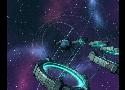
ORBIT is a game about ... throwing stuff in orbit ! Your objective is to activate every gates simutaenously in each level.
To do so you have access to an unlimited amount of orbiters, throw them through a gate to charge it.
Orbiters get destroyed when they collide with something or get out of range.
Le « bac à sable interactif » est une expérience tactile qui invite l’expérimentateur à créer des paysages selon son envie, son humeur. L’idée originale de cette animation de videomapping (projection vidéo) est de permettre de déplacer des masses de sable pour créer des décors de manière dynamique, comme des montages ou des étendues d’eau.
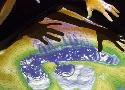
Gary Glesener, director of UCLA’s Modeling and Educational Demonstrations Laboratory, gives us a tour of the lab’s Augmented Reality Sandbox. The video was produced by Sebastian Hernandez of the UCLA Broadcast Studio.
The Augmented Reality Sandbox is an augmented reality application
scanning a sand surface using a Kinect 3D camera, and projecting a real-
time updated topography map with topographic contour lines, hillshading,
and an optional real-time water flow simulation back onto the sand
surface using a calibrated projector.
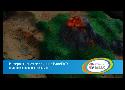
Want to make all your 5 year old son’s friends jealous? What if he told them he could make REAL volcanoes in his sandbox? Will this be the future of sandboxes, digitally enhanced with augmented reality?
It’s not actually that hard to set up! The system consists of a good computer running Linux, a Kinect, a projector, a sandbox, and sand. And that’s it! The University of California (UC Davis) has setup a few of these systems now to teach children about geography, which is a really cool demonstration of both 3D scanning and projection mapping. As you can see in the animated gif above, the Kinect can track the topography of the sand, and then project its “reality” onto it. In this case, a mini volcano.
The SandyStation delivers whole new experience with sandbox and pushes creativity and fun behind the line. Digital projection and 3D vision makes possible to build beautiful and colorful landscapes looking like a living land. A number of games and applications give you a wide range of fun like building rivers, mountains or volcanoes spewing lava. And this is just the beginning…
L’arrangement des touches de la disposition bépo est basé sur une étude statistique de la langue française. Les lettres les plus fréquentes sont placées sur la rangée de repos ce qui permet de limiter les efforts et donc la fatigue musculaire. La frappe devient plus confortable ce qui réduit les risques de troubles musculosquelettiques.
AR-Sandbox is a visually augmented sandbox. It is inspired by SARndbox and was developed for our augmented reality lecture in a team of three students. The Project is available on Github.
Visually augmented sandbox using Kinect and Unity3D. Inspiried by SARndbox
See the Project in action on Youtube. Otherwise there are some images in the project "Images" folder.
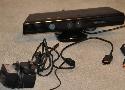
This is the pinout for the connector (source). I used a cheap Kinect extension cable that I picked up for $5 and spliced that onto a USB cable and a 1.5Amp 12V regulated power supply.
Dedicated CAD software speeds up drafting significantly with functions like: Extend, Trim, Intersect, Fillet /w radius and Offset /w distance. At the moment of this writing many of these functions aren't included by default in regular distributions on Blender.org, so i've coded scripts to perform a few of the main features that I missed most.
My scripts have shortnames: VTX, V2X, XALL, BIX, CCEN and are described separately in sections below. Fillet and Offset are written by zmj100 and can be found here.
Since I started this repository: Vertex Fillet / Bevel was added to master. So no more need for a separate addon. (Ctrl+Shift+b)
Nous favorisons la publication et la création collaborative .
Nous vous proposons de nombreux ouvrages libres.
This page holds complete, step-by-step installation and set-up instructions for the AR Sandbox software, starting from a blank desktop PC with an Nvidia GeForce graphics processing unit (GPU). These instructions are based on the current version of the Linux Mint operating system. Due to increasing weirdness in recent versions of Mac OS X (starting with version 10.7), we can no longer recommend Mac computers and Mac OS X to drive AR Sandbox installations.
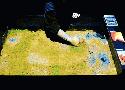
There’s something incredibly gratifying about swiping your hand across a surface, digging a trough with your fingers, and watching a flowing river come to life before your eyes. These interactive displays use sand as the base medium, allowing you to scoop, smash, and splatter structures that are then analyzed by a Microsoft Kinect and fed to a computer, which then projects a topographical map onto the surface. The result is you feeling like a giant, shaping the world beneath you
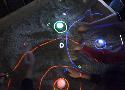
The SND is both a complex generative music system as well as a novel and intuitive interface for influencing and interacting with this system. The interface consists of a table height box filled with sand, a Microsoft Kinect (which provides an RGB camera and depth sensing capabilities), an overhead projector, and several internally lit tangible objects. The Kinect is used to track object position, object color, and sand topography. The projector is used to provide visual feedback. Sound is provided by a multi-channel loudspeaker system arranged around the box.
The various parameters that determine the functionality of the SND’s generative music system are influenced by the user’s interactions with the sandscape and provided tangible objects. By manipulating the sand and objects the user is able to influence various aspects of the generative music system.C’est le tutoriel le plus important de tous. Tu devrais le garder en livre de chevet, et le lire et relire au moins 8 fois !
You can use command line arguments to start your Mozilla application with special behavior.