103 liens privés
Le « bac à sable interactif » est une expérience tactile qui invite l’expérimentateur à créer des paysages selon son envie, son humeur. L’idée originale de cette animation de videomapping (projection vidéo) est de permettre de déplacer des masses de sable pour créer des décors de manière dynamique, comme des montages ou des étendues d’eau.

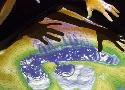
Gary Glesener, director of UCLA’s Modeling and Educational Demonstrations Laboratory, gives us a tour of the lab’s Augmented Reality Sandbox. The video was produced by Sebastian Hernandez of the UCLA Broadcast Studio.
The Augmented Reality Sandbox is an augmented reality application
scanning a sand surface using a Kinect 3D camera, and projecting a real-
time updated topography map with topographic contour lines, hillshading,
and an optional real-time water flow simulation back onto the sand
surface using a calibrated projector.
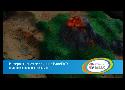
Want to make all your 5 year old son’s friends jealous? What if he told them he could make REAL volcanoes in his sandbox? Will this be the future of sandboxes, digitally enhanced with augmented reality?
It’s not actually that hard to set up! The system consists of a good computer running Linux, a Kinect, a projector, a sandbox, and sand. And that’s it! The University of California (UC Davis) has setup a few of these systems now to teach children about geography, which is a really cool demonstration of both 3D scanning and projection mapping. As you can see in the animated gif above, the Kinect can track the topography of the sand, and then project its “reality” onto it. In this case, a mini volcano.
The SandyStation delivers whole new experience with sandbox and pushes creativity and fun behind the line. Digital projection and 3D vision makes possible to build beautiful and colorful landscapes looking like a living land. A number of games and applications give you a wide range of fun like building rivers, mountains or volcanoes spewing lava. And this is just the beginning…
AR-Sandbox is a visually augmented sandbox. It is inspired by SARndbox and was developed for our augmented reality lecture in a team of three students. The Project is available on Github.